

A Zapier Forms alternative: Formstep vs Zapier Forms, formerly Interfaces
Zapier Forms, formerly Interfaces, comes with every Zapier plan and suits a public form. Formstep suits one named person. Compared on 14 November 2026.
By Onur Hakbilen, founder of Formstep · Published
I built Formstep, so read this knowing which side I am on, and check it against Zapier’s Forms help pages and pricing page. If you are searching for a Zapier Forms alternative and your form is a public one that starts a Zap, stay with Zapier Forms.
It comes with every Zapier plan, Free included. Its triggers and actions use no tasks, and each submission lands in a Zapier Table next to your Zaps.
The rest of this post is about the other case: one named person outside your company has to answer, and a Zap has to know when they did, or that they never will.
Zapier Forms or Formstep: the short answer
Pick Zapier Forms if anyone with the link may answer and the form’s job is to start a Zap. A lead form, an intake form or an internal request form all fit it.
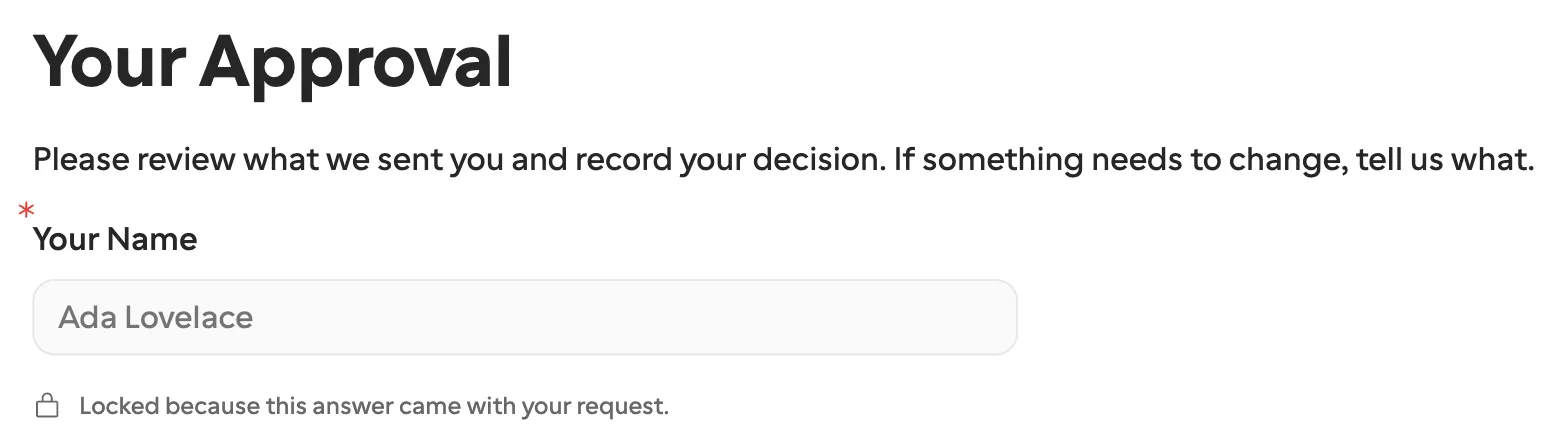
Pick Formstep if one named person outside the team has to answer: what you know is prefilled or locked, someone has to chase them, and a Zap has to start when they answer or when the request expires.
With a form and three Zaps
7 steps to build and keep running
- Zap 1: a deal moves stage
- Zap 1: email a form link with values in the URL
- Zap 1: add a row to a table of who was asked
- Zap 2: the form is submitted
- Zap 2: find the row and mark it answered
- Zap 3: every morning, find rows with no answer
- Zap 3: email a reminder, count it, give up at three
With a Formstep request
4 steps to build
- Zap 1: a deal moves stage
- Zap 1: Create Request
- Zap 2: Request Completed, with Paths on the outcome
- Zap 3: Request Expired
Formstep handles the rest
- Prefilled and locked fields, held on the server
- A form under your brand, in their language
- Invitation and reminder emails, on Pro
- Answers checked with AI Validation, on Pro
- Expiry and cancellation, sent as events
There are two Zapier forms
Zapier Forms is the product that used to be called Interfaces. Zapier’s guide to creating a form says Interfaces is now Zapier Forms and that existing projects work as before. You build a form project out of pages, each submission is stored in a connected Zapier Table, and a submit action can run a Zap. Everyone opens the same URL.
Human in the Loop is the one you use partway through a run. Its Collect Data action pauses the Zap and asks a reviewer to fill in a few inputs. Zapier’s guide says a reviewer needs a Zapier account, and that a Pro account can send requests only to itself. I covered that half in Zapier approvals for people with no Zapier account, so this post stays mostly with Zapier Forms.
Formstep and Zapier Forms compared
Zapier’s column comes from its pricing page and help center on 14 November 2026, and Formstep’s from our pricing and docs. “Not found” means we did not find it there, so check if it decides your choice.
| What you are comparing | Zapier Forms | Formstep |
|---|---|---|
| Cost | Included in every Zapier plan; Forms triggers and actions use no tasks | Free plan 1,000 submissions and requests a month; Pro $39, or $32.50 billed yearly |
| How much you can build | Unlimited form projects; 10 pages per account on Free, 50 on Professional, 150 on Team | Unlimited forms on every plan |
| Who can answer | Anyone with the link; from Professional, a password or a list of users who sign in | A request: one named recipient, one completion, no account. A share link: anyone |
| Pausing a Zap | A submission starts a Zap. Human in the Loop pauses one, for a reviewer with a Zapier account | A request does not pause a Zap: one Zap creates it, and another starts when it ends |
| Prefill | URL parameters, by field reference ID | Held on the server; the link carries a token |
| Locking a field | Not found in its docs | Per request |
| Where it opens | A URL Zapier hosts; your own domain on Team and Enterprise | form.formstep.io; on Pro, up to 5 custom domains |
| Branding | Logo and colors from Professional; removing the Zapier logo from Team | Logo, cover and theme presets on every plan; custom themes and branding removal on Pro |
| Conditional logic | Professional and up | Every plan |
| File uploads | Max file size 5 MB with 3 files on Free and 25 MB with 100 files on Team; for Professional, the pricing page says 10 MB and the help center 25 MB | Up to 1 GiB per file, within 100 MB of storage on Free and 100 GB on Pro |
| Payments and signatures | A Stripe component on the page; a signature not found in its docs | A payment question through Stripe and a signature question, in the same form |
| Languages | Not found in its docs | One form in up to 65 languages, every plan |
| Reminders | Not found in its docs for a form | Pro and up, on a schedule |
| When nobody answers | A public form does not know who has not answered | Expiry after 30 days by default, up to 365; expired and canceled each start a Zap |
What people run into with Zapier Forms
These come from Zapier’s help center and its community forum, read on 14 November 2026. Zapier ships often, so an older thread may not describe the product today.
| What people ask | What Zapier’s pages say | What Formstep does |
|---|---|---|
| Can I prefill a value without showing it? | Prefill is a URL parameter. In a December 2025 thread about another form tool, a Zapier community manager wrote that a public form’s URL shows its prefilled values to anyone who sees the link | Keeps prefilled values on the server, and locks a field per request |
| Can each person get their own link? | A form project has one URL. From Professional, managed users sign in with a code or a magic link, up to 100 users, or 500 on Team | One secret link per recipient, with no sign-in; email verification on Business |
| Can several pages fill one record? | In a June 2024 thread, each page of a form project wrote its own table row, and the accepted answer joins them with a shared value and a Zap | Pages, logic and repeating groups are one form and one submission |
| Can I use my own domain and drop the Zapier logo? | Both are listed from Team | Both are on Pro |
| Who reminds them, and what if they never answer? | No reminder found for a form. Human in the Loop can remind its reviewer, then skips the step or ends the run on a timeout | Scheduled reminders on Pro and Business; expiry on every plan, as a Zap trigger |
Where Formstep does not help. A request does not pause a Zap, so you build two Zaps where Human in the Loop needs one. Create Request uses a task, and a Zap that also sends the link has three steps, which needs a paid Zapier plan. The answers reach a Zapier Table only if your second Zap writes them there. Nobody can prefill a file, signature or payment, and there is no SSO on any plan. On Free you send the link and do the chasing, and 100 MB of storage fills quickly.
Where Zapier Forms is the better pick
- It is already in your Zapier plan, on Free too, and its triggers and actions use no tasks.
- Answers go straight into a Zapier Table, with no second service to approve or pay for.
- A form project can also be a small internal tool: its components include tables, a Kanban board, a checklist and a chatbot.
- Colleagues and clients who come back can sign in as managed users, with a code, a magic link or a Google account.
- Professional, from $19.99 a month billed annually, adds conditional logic, your logo and colors and a password, and the same plan runs your Zaps. Formstep Pro costs more.
- For a colleague partway through a run, Human in the Loop keeps the answer in the same Zap.
Where Formstep is the better pick
- One person gets one link. It accepts one completion, and the Requests page shows who has not answered yet.
- A request keeps prefilled values on the server, so a sensitive one like an IBAN is not part of a link, and a vendor can see their company name without changing it.
- Your logo is on the form on every plan, and your own domain is on Pro, where Zapier lists a custom domain from Team.
- Signatures, scheduling, repeating groups and documents to read sit in the same form, in up to 65 languages.
- Keys survive translation:
answers.ibanstaysibanwhen you retitle or translate, and a choice comes back as its option key. - Expiry and cancellation each start a Zap, so a deal does not sit forever on someone who never answered. The step-by-step post builds those Zaps, starting from the approval template.
Can I use both?
Yes, and I would. Keep Zapier Forms for the public form and the internal steps, then send a Formstep request for the step that leaves the company. If you move a public form over as well, Public Link Submission Created starts a Zap from a Formstep share link, as a Zapier Forms submission does. Each request uses one unit of Formstep’s monthly allowance when it is created, answered or not.
How we compared them
We read Zapier’s pricing page, its help center and the forum threads linked here on 14 November 2026. We did not build the same form in both or run a scored test, and no link carries an affiliate code. Zapier’s help pages did not list a form’s field types, so the tables do not count them. If something is out of date, tell us through Contact support in the footer.
For more, see the Zapier integration, Formstep vs n8n’s form, Slack approvals vs a request, approvals in Make and why a form builder is not enough for one person.